
GHRP-6 Acetate
GHRP-6 Acetate is a synthetic hexapeptide that mimics the action of ghrelin, the body’s primary hunger hormone, to stimulate the pulsatile release of growth hormone. While it is a first-generation secretagogue, it remains a focal point in research for its rapid and potent physiological effects.
GHRP-6
Common Name: GHRP-6
Category: Growth Hormone Secretagogue (GHS) / Ghrelin Mimetic.
Chemical Structure: L-Histidyl-D-tryptophyl-L-alanyl-L-tryptophyl-D-phenylalanyl-L-lysinamide.
Alternative Names: Growth Hormone Releasing Peptide-6, GHS-6
CAS NUMBER: 87616-84-0
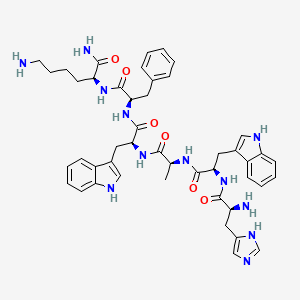
WHAT IS GHRP-6
GHRP-6 is one of the most versatile peptides in the Growth Hormone Secretagogue (GHS) family. Its primary utility in research stems from its ability to target the Ghrelin receptor (GHS-R1a) across multiple organ systems.
1. Endocrinology and GH Secretion
This is the most established area of GHRP-6 research.
-
Pulsatile GH Release: Research focuses on how GHRP-6 triggers the pituitary gland to release Growth Hormone in pulses, mimicking natural rhythms.
-
Somatostatin Inhibition: Scientists study the peptide’s ability to inhibit Somatostatin, the hormone responsible for "turning off" GH release, thereby allowing for a more significant GH pulse.
-
Synergistic Effects: Many studies look at how GHRP-6 works when paired with GHRH (Growth Hormone Releasing Hormones) like CJC-1295 to achieve a maximized hormonal response.
2. Metabolic Health and Body Composition
Research in this area evaluates the downstream effects of elevated GH levels on physical structure.
-
Muscle Hypertrophy: Study of the peptide's role in nitrogen retention and protein synthesis to increase lean muscle mass.
-
Lipolysis (Fat Loss): Evaluation of how GHRP-6 facilitates the breakdown of adipose tissue for energy.
-
Orexigenic Signaling (Appetite): Because it mimics ghrelin, a massive area of research involves its ability to stimulate hunger, which is studied in the context of cachexia (muscle wasting) and eating disorders.
3. Wound Healing and Tissue Repair
GHRP-6 is frequently researched for its potential to accelerate recovery from physical trauma.
-
Collagen Synthesis: Research explores how increased GH levels boost collagen production, which is essential for repairing tendons, ligaments, and skin.
-
Anti-Fibrotic Effects: Some studies suggest GHRP-6 may reduce the formation of excessive scar tissue (fibrosis) in damaged internal organs, such as the heart and liver.
4. Neuroprotection and Cognitive Function
The discovery of ghrelin receptors in the brain has led to research beyond simple hormone release.
-
Neuronal Survival: GHRP-6 is studied for its anti-apoptotic (anti-cell death) effects on neurons, particularly following an ischemic event (stroke).
-
Memory and Learning: Research models evaluate whether the peptide can improve spatial memory and protect against cognitive decline associated with aging or neurodegenerative diseases.
5. Cardiovascular Research
One of the more specialized research areas involves the heart and vascular system.
-
Myocardial Protection: Studies have investigated the peptide's ability to protect heart tissue during a myocardial infarction (heart attack).
-
Vascular Tone: Researchers look at how GHRP-6 interacts with the CD36 receptor to influence blood vessel health and reduce systemic inflammation.
WHAT DOES GHRP-6 DO?
Ghrelin Receptor Activation
The primary function of GHRP-6 is to act as a GHS-R (Growth Hormone Secretagogue Receptor) agonist. By binding to these receptors—primarily located in the pituitary gland and the hypothalamus—it initiates a cascade of signals that mimic the action of the natural hormone ghrelin.
Pulsatile GH Release
Once the receptors are triggered, GHRP-6 stimulates a "pulse" of endogenous growth hormone from the pituitary gland.
-
Pulsatile vs. Continuous: Unlike synthetic Growth Hormone injections (exogenous GH), which provide a steady, artificial level of hormone, GHRP-6 encourages the body to release its own stored GH.
-
Natural Regulation: Because it works with the pituitary's existing architecture, the process remains pulsatile and natural, following the body's physiological patterns of secretion.
-
Risk Profile: This endogenous stimulation is typically considered lower-risk than direct GH injections, as it minimizes the risk of completely shutting down the body’s natural production and avoids many of the side effects associated with high-level synthetic hormone replacement.
Secondary Signaling
Beyond the pituitary, its binding to receptors in the hypothalamus results in the orexigenic effect (intense hunger signaling) and the suppression of somatostatin, ensuring that the growth hormone pulse is not prematurely inhibited by the body’s "off-switch" hormone.
BENEFITS & CLINICAL TRIALS
GHRP-6 offers a broad range of benefits that appeal to both athletes and those seeking enhanced recovery or body composition improvements. By leveraging natural hormonal pathways, it delivers systemic effects that go beyond simple growth hormone elevation.
1. Lean Muscle Growth and Repair
By increasing the body’s natural GH and IGF-1 levels, GHRP-6 helps promote lean muscle protein synthesis and muscle fiber repair.
-
Hypertrophy: GH drives satellite cell activation—the essential precursor to muscle growth.
-
Adaptation: Research suggests it helps the body adapt to progressively heavier training loads, supporting both strength and size gains.
2. Accelerated Recovery and Injury Repair
Because GH and IGF-1 are key modulators of connective tissue repair, GHRP-6 is frequently studied in the context of rehabilitation from joint, tendon, or muscle injuries.
-
Collagen Synthesis: The pulses triggered by GHRP-6 stimulate the production of collagen, the building block of connective tissue.
-
Joint Integrity: It is often researched alongside peptides like BPC-157 or TB-500 to improve joint resilience and support faster "return to play" timelines for athletes.
3. Fat Loss and Body Recomposition
GHRP-6 indirectly promotes lipolysis by raising GH levels, which increases the mobilization of stored fatty acids to be used as fuel.
-
Nutrient Partitioning: It helps direct nutrients toward muscle tissue rather than fat storage.
-
Phase Versatility: It is studied for its ability to preserve lean mass during "cutting" phases while enhancing fat oxidation.
4. Appetite Stimulation (Orexigenic Effect)
A unique feature of GHRP-6 is its mimicry of the hunger-inducing effects of ghrelin. This makes it a valuable tool in clinical research for:
-
Bulking Support: Helping athletes consume the high caloric intake necessary for growth.
-
Medical Context: Supporting individuals with poor appetite due to stress, illness, or muscle-wasting conditions (cachexia).
GHRP-6 is known to enhance GH release during slow-wave sleep (SWS), the critical deep-sleep phase where the majority of physical repair occurs.
-
Restorative Sleep: By supporting better sleep quality, it indirectly boosts immune resilience, mood, and overall workout recovery.
Clinical Research Takeaway
While the benefits are extensive, it is important to note that most findings come from specialized research settings. Clinical trials emphasize that the efficacy of GHRP-6 is highly dependent on timing (administration on an empty stomach) and consistency in dosing to maintain pulsatile rhythms.
SIDE EFFECTS
While GHRP-6 is generally well-tolerated when used correctly, users should be aware of several common side effects, primarily stemming from its ghrelin-mimicking and growth hormone-modulating properties.
1. Increased Hunger (Orexigenic Effect)
As the most common side effect, GHRP-6 significantly increases appetite, often within 15–30 minutes of injection due to ghrelin receptor activation.
-
Management: To control this, dose in a fasted state (morning or pre-bed) and prioritize nutrient-dense meals post-injection to prevent binge eating or unwanted fat gain.
2. Water Retention and Mild Bloating
Increased GH and IGF-1 levels can cause transient fluid retention, particularly around joints or under the skin.
-
Management: Monitor sodium intake, stay well-hydrated, and consider light cardio or sauna use to support lymphatic drainage. Reducing carbohydrate spikes can also limit insulin-induced fluid shifts.
3. Numbness or Tingling (Paresthesia)
Elevated GH levels may affect nerve tissues, leading to tingling or numbness in the hands and wrists, similar to carpal tunnel syndrome.
-
Management: This is typically dose-related. If symptoms occur, lower the dosage or frequency, and consider taking periodic breaks (2–3 weeks) during longer cycles.
4. Cortisol and Prolactin Elevation
GHRP-6 can stimulate "spillover" hormones, specifically cortisol (the stress hormone) and prolactin, especially at higher doses.
-
Management: Monitor for mood swings, irritability, or fatigue. Some researchers suggest Vitamin B6 or Mucuna pruriens to help manage prolactin levels if they become elevated.
5. Injection Site Irritation
As with any subcutaneous (SubQ) therapy, localized redness, itching, or mild bruising may occur.
-
Management: Rotate injection sites (abdomen, thigh, or arm) consistently. Always use sterile techniques, alcohol swabs, and ensure the peptide is properly reconstituted with bacteriostatic water.
Safety Takeaway
In most cases, side effects are mild and manageable with appropriate dosing and supportive care. However, because this peptide influences multiple hormonal pathways, those with pre-existing hormone imbalances or underlying health issues should consult a physician prior to use.
IS GHRP-6 SAFE?
While GHRP-6 is highly effective in research settings, it is subject to strict regulatory oversight and is not recognized as a standard medical treatment. Understanding its legal classification is critical for compliance with local laws and athletic standards.
FDA and Clinical Status
-
FDA Designation: GHRP-6 is not approved by the FDA for human use outside of licensed clinical research.
-
Off-Label Use: While the peptide is available through research chemical suppliers, its use in bodybuilding, performance enhancement, or anti-aging protocols is considered off-label and may be unauthorized or illegal depending on the jurisdiction.
Regional Legal Framework (United States)
-
Classification: It is currently classified as a research chemical.
-
Marketing Restrictions: While it is not a controlled substance on the federal level, marketing or selling GHRP-6 specifically for human consumption is strictly prohibited.
-
Personal Possession: Possession for personal research exists in a significant legal gray area, which varies greatly depending on individual state laws.
Sports and Anti-Doping Regulations
-
WADA Classification: GHRP-6 is strictly banned by the World Anti-Doping Agency (WADA). It is listed under the category of S2: Peptide Hormones, Growth Factors, and Related Substances.
-
Sanctions: Athletes subject to drug testing (WADA, USADA, etc.) face severe suspensions or lifetime sanctions if they test positive for GH-releasing peptides
Administration
GHRP-6 requires specific protocols to ensure maximum bioavailability and effectiveness. Because it is highly sensitive to blood glucose levels, timing is as critical as the dose itself.
Administration Protocols
-
Route: Administered via Subcutaneous (SubQ) or Intramuscular (IM) injection. Subcutaneous is the most common for research purposes, typically injected into fatty tissue (e.g., abdomen or thigh).
-
Fasting Requirement: GHRP-6 must be taken on an empty stomach. Elevated blood glucose or insulin levels can significantly blunt the GH release.
-
Suggested Timing:
-
Upon Waking: While in a fasted state to maximize the first pulse of the day.
-
Pre-Workout: If in a fasted or low-insulin state to support performance and growth.
-
Pre-Bed: To enhance the natural GH pulse that occurs during deep sleep.
-
In research settings, the dose is typically titrated based on the subject's response and specific goals:
-
Starting Dose: 100 mcg, administered 2–3 times daily. This is generally sufficient to stimulate robust GH pulses without causing excessive appetite stimulation or receptor desensitization.
-
Advanced Range: Advanced protocols may titrate up to 300 mcg per injection.
-
Frequency: 2–3 times per day is the standard frequency to maintain pulsatile rhythms.
Reconstitution
Step-by-Step Reconstitution Process
-
Preparation: Clean the rubber stoppers of both the BAC water and the GHRP-6 vial with an alcohol swab.
-
Pressure Equalization: Draw an amount of air into your syringe equal to the amount of water you plan to use. Inject the air into the BAC water vial to make withdrawal easier.
-
Withdrawal: Draw the desired amount of BAC water (typically 2 mL or 3 mL) into a sterile syringe.
-
The "Wall" Technique: Insert the needle into the GHRP-6 vial. Slowly inject the water so that it drips down the inside glass wall of the vial rather than directly onto the powder. This prevents the peptide from foaming or being damaged by the pressure.
-
Dissolving: Do not shake the vial. Gently swirl or roll the vial between your hands until the powder is completely dissolved and the liquid is clear.
Dosing Math
Most research vials contain 5 mg of GHRP-6. Use the following table to determine your concentration based on the volume of water added.
| Total Water Added | Total mg in Vial | Resulting Concentration | Dose per 10 Units (0.1 mL) |
| 2 mL | 5 mg | 2.5 mg / 1 mL | 250 mcg |
| 2.5 mL | 5 mg | 2.0 mg / 1 mL | 200 mcg |
| 3 mL | 5 mg | 1.67 mg / 1 mL | 167 mcg |
| 5 mL | 5 mg | 1.0 mg / 1 mL | 100 mcg |
Example Calculation (2 mL Dilution):
If you add 2 mL of water to a 5 mg vial:
The vial now contains 5,000 mcg in 2 mL.
This equals 2,500 mcg per 1 mL.
On a standard 100-unit (1 mL) insulin syringe, 10 units (0.1 mL) will provide exactly 250 mcg.
Storage Post-Reconstitution
Once mixed, GHRP-6 is fragile and highly sensitive to heat and light.
-
Temperature: Store in the refrigerator (2°C to 8°C). Do not freeze.
-
Stability: Use the reconstituted solution within 3 to 4 weeks for maximum potency. If the solution becomes cloudy or contains floaters, discard it immediately.
WHERE TO BUY GHRP-6
Researchers should always vet their sources to ensure that a few key factors are present in their test subjects. With the rise in peptide popularity in recent years, many companies have created peptides that undergo little to no testing, quality standards, or regulations. As it is not regulated by the FDA, researchers must do their due diligence and look closely at the company's practices and standards.
When selecting a supplier for GHRP-6, focus on transparency and quality assurance, not customer testimonials:
- Quality Documentation: A reputable supplier must provide:
- Certificate of Analysis (COA): This document must be recent (corresponding to the batch/lot number purchased) and demonstrate a minimum purity of >95% via High-Performance Liquid Chromatography (HPLC) testing.
- Mass Spectrometry (MS) Data: The COA must include mass spectrometry (MS) confirmation to verify the compound’s exact molecular weight, confirming its chemical identity.
- Contaminant Testing: Look for reports on heavy metals, microbial load, and solvent residues (e.g., residual trifluoroacetic acid, or TFA). The presence of these contaminants can severely compromise research and introduce unknown toxicity.
- Vendor Verification and Transparency
-
Specialization: Prioritize vendors who specialize in the manufacturing and distribution of peptides for academic and biotechnology research, rather than general supplement vendors.
-
Manufacturing Origin: Inquire about the source of the raw materials and the manufacturing protocols. Ideal suppliers adhere to strict quality control processes.
-
Handling & Storage: The supplier must provide clear documentation on the proper storage and handling procedures for the peptide to maintain its stability and integrity.
-
Conclusion on Procurement: Given the high risk of contamination, mislabeling, and legal ambiguity. The use of GHRP-6 outside of this defined research context poses unacceptable, unquantified risks to human health.
REFERENCES
“Growth Hormone Releasing Hexapeptide.” National Center for Biotechnology Information. PubChem Compound Database, U.S. National Library of Medicine, pubchem.ncbi.nlm.nih.gov/compound/9919153. Accessed 24 Nov. 2025.
“Peptide Therapy - GHRP-6.” Revolution Health & Wellness, revolutionhealth.org/blogs/news/peptide-therapy-ghrp-6#:~:text=GHRP%2D6%20(5mg)%20is,GHRH%20to%20amplify%20GH%20secretion. Accessed 24 Nov. 2025.
by, Written. “GHRP-6 Guide: Benefits, Dosage, Side Effects, and Best Stacks.” Swolverine, swolverine.com/blogs/blog/what-is-ghrp-6?srsltid=AfmBOopfLg-r_VfDRYgv9X_lJAdyviIcfGXDPxWDg7KtN4fF8lm92Oko. Accessed 24 Nov. 2025.
Berlanga-Acosta, J., et al. (2016). Growth Hormone-Releasing Peptide 6 Enhances the Healing Process and Improves the Esthetic Outcome of the Wounds. Plast Surg Int.
Bowers, C. Y., et al. (1984). On the in vitro and in vivo activity of a new synthetic hexapeptide that acts on the pituitary to specifically release growth hormone. Endocrinology.
Frago, L. M., et al. (2002). Growth Hormone (GH) and GH-Releasing Peptide-6 Increase Brain Insulin-Like Growth Factor-I Expression and Activate Intracellular Signaling Pathways Involved in Neuroprotection. Endocrinology.
McMahon, C. D., et al. (2001). GH-releasing peptide-6 overcomes refractoriness of somatotropes to GHRH after feeding. Journal of Endocrinology.
Mendoza Mari, Y., et al. (2021). Growth hormone-releasing peptide 6 prevents cutaneous hypertrophic scarring: early mechanistic data from a proteome study. Scientific Reports.
World Anti-Doping Agency (WADA). The Prohibited List: S2. Peptide Hormones, Growth Factors, and Related Substances.
Zheng, Q., et al. (2008). Prokinetic effects of a ghrelin receptor agonist GHRP-6 in diabetic mice. World Journal of Gastroenterology.
The PrepTide: Disclaimer
